
When Companies Invest in Remote Workers: OTAP’s Solar Panel Success Story
How OTAP Sarl Is Ensuring Business Continuity for Our Distributed Team
Our Accounting Manager – Charrise Dano.
When Global Crisis Threatened OTAP’s Operations
The geopolitical tensions between Iran and the US-Israel alliance sent shockwaves through global energy markets. When the Hormuz Strait closure rippled through the Philippines, we watched carefully: gas prices tripled, commodity costs climbed, and electricity rates surged across the board.
For OTAP Sarl managing three separate entities with a distributed remote workforce this wasn’t just market observation. It was an operational threat.
Identifying the Real Problem
Our Accounting Manager, a pioneering member of our team since 2018, manages critical financial operations across our three companies from her home in the Philippines. She’s a key part of our overseas operations infrastructure.
The Philippine government encouraged remote work arrangements during this period. But our team member faced a problem beyond rising costs: rotational brownouts. The energy crisis directly threatened her ability to work reliably from home.
A sudden power outage would mean missing critical client calls, losing work progress, and jeopardizing our service delivery. For a company that depends on operational capability, this wasn’t an acceptable risk.
We had to act.
OTAP’s Solution: Full Sponsorship
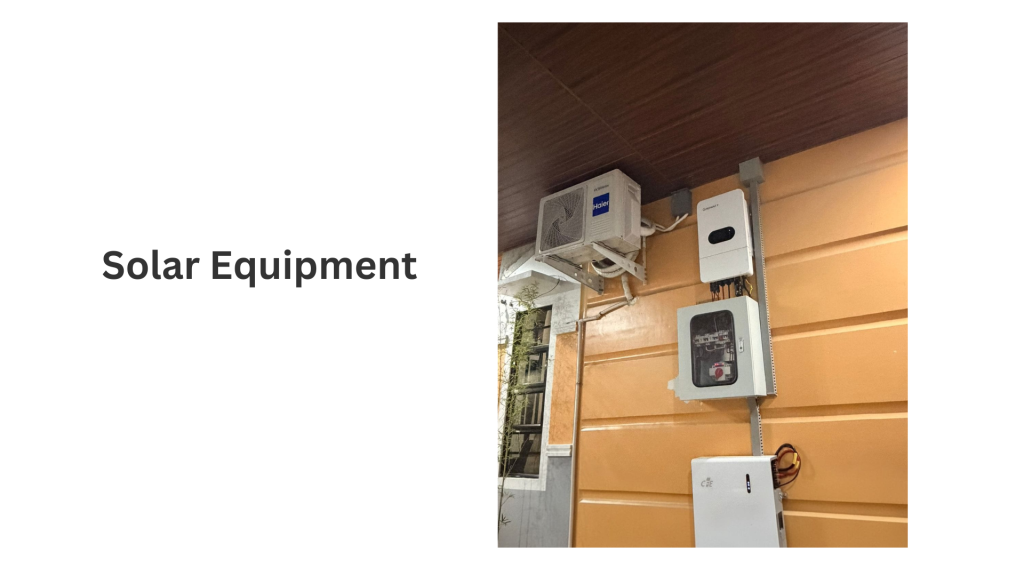
When our team member approached OTAP leadership about installing a home solar system, we didn’t hesitate. This wasn’t about reimbursement or a loan—OTAP committed to full sponsorship of the installation.
Why? Because at OTAP, we understand a fundamental truth: investing in remote worker infrastructure isn’t an expense it’s protecting the business.
Between March and May, our team member researched and sourced the hybrid solar system. Despite rising market costs during that period, OTAP approved the investment immediately. Reliable power for remote workers wasn’t a luxury request, it was operational necessity.
The Results: Free Daytime Electricity
Within weeks of installation, the results exceeded expectations.
Here’s what changed: our team member now enjoys completely free electricity during all working daylight hours.
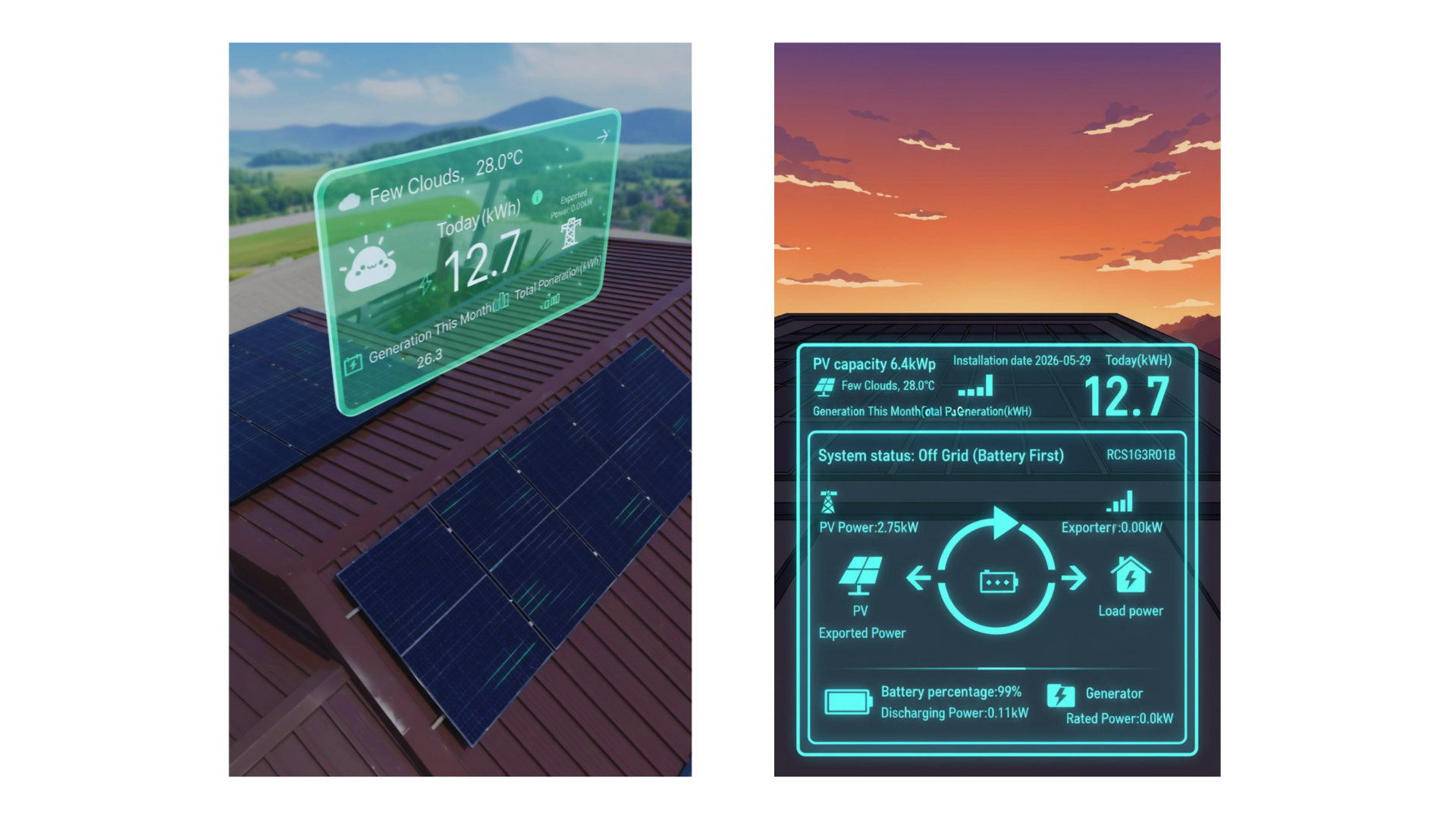
No meter running. No consumption charges. The solar panels generate power directly while simultaneously charging battery storage zero cost to the home.
On recent utility bills covering 20 out of 30 days with the solar system operational, electricity costs dropped by over 60%. The power company’s 20% rate increase made the savings even more impressive. What would have been rising costs became tangible savings.
When we project these savings forward annually, the return on our investment is clear the system pays for itself in roughly two years. But the real value isn’t just financial: our team member maintains uninterrupted work capacity with zero dependency on grid electricity during her primary working hours.
How It Works: Smart Energy Management
Daytime (9 AM – 5 PM work hours) – Solar panels generate completely FREE electricity while simultaneously charging battery storage. Zero grid dependency. Zero charges on the meter. The work environment runs entirely on free solar power.
Evening (6 PM – 10 PM) – The home seamlessly transitions to stored battery energy still zero grid consumption, still free power.
Night (10 PM – 9 AM) – Once battery depletes, minimal grid usage only during late-night off-peak
hours when rates are lowest.
This approach fundamentally transforms the cost structure. Our team member’s primary working hours when she needs reliable power most—now cost absolutely nothing. The most expensive time of day (daytime peak rates) is now the cheapest (free solar). Grid electricity is only consumed during minimal late-night hours when rates are already depressed.
The result: During standard business hours, electricity is completely free.
Built to Grow
The system has been designed with scalability in mind. We can add more panels, expand battery capacity, or pursue fuller energy independence as needs evolve. For now, we’ve achieved the optimal balance: guaranteed work continuity, significant cost savings, and protection against infrastructure failures.
Why Remote Worker Infrastructure Matters (And Why OTAP Stepped Up)
For overseas companies with distributed teams in emerging markets, remote worker reliability isn’t a convenience—it’s operational infrastructure.
Energy instability directly threatens productivity, client relationships, and service delivery. For OTAP managing three entities with critical financial operations, a blackout affecting our Accounting Manager isn’t a minor inconvenience—it’s a business continuity crisis.
This is why OTAP took action. By proactively sponsoring a home solar solution, we solved this vulnerability while simultaneously demonstrating tangible commitment to our remote team members. And the bonus: now our team member enjoys completely free electricity during all working daylight hours.
The Bigger Picture: This Is What OTAP’s Workforce Investment Looks Like
This solar installation represents OTAP’s core belief: remote worker success directly enables company success.
OTAP didn’t approach this as an employee benefit or nice gesture. We recognized a clear operational risk energy instability threatening critical functions and eliminated it strategically.
The numbers support OTAP’s decision:
- Cost Recovery: System pays for itself in roughly two years
- Operational Security: Guaranteed power for 24/7 business continuity
- Employee Retention: Demonstrates genuine OTAP investment in team stability
- Free Daytime Electricity: Team member now enjoys completely free power during work hours
- Competitive Advantage: Shows OTAP’s commitment to supporting distributed talent globally
For overseas companies like OTAP with teams across emerging markets facing infrastructure challenges, this model works at multiple levels: it solves immediate operational threats, delivers measurable ROI, and strengthens team loyalty.
OTAP invested in our team member’s work environment because we understand that protecting her ability to work reliably is protecting our business. She now has free electricity during all her working hours, uninterrupted service delivery, and genuine security.
That’s not charity. That’s OTAP’s strategy. And it’s exactly how companies should think about remote workforce investment.